30/06/2025
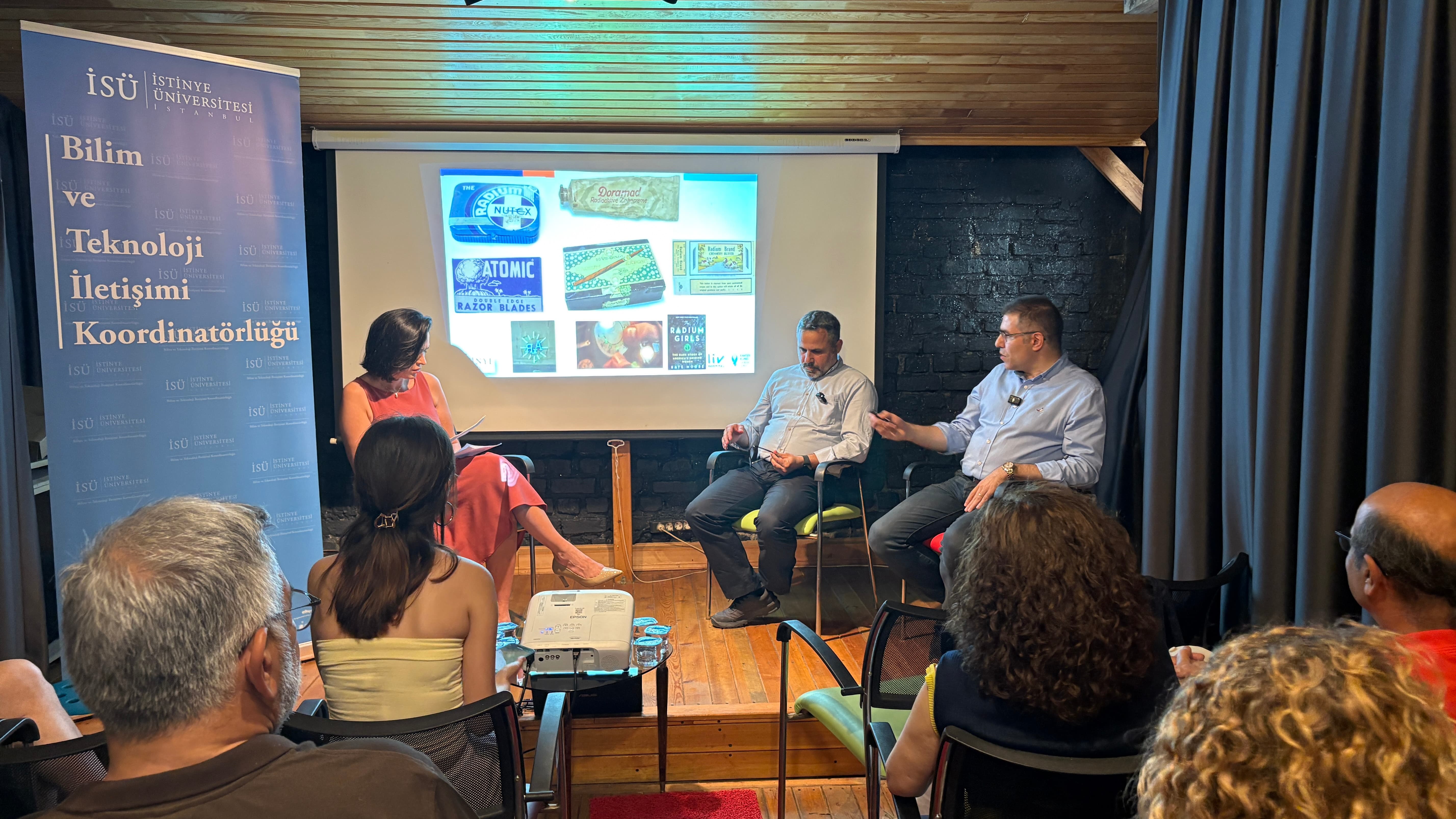
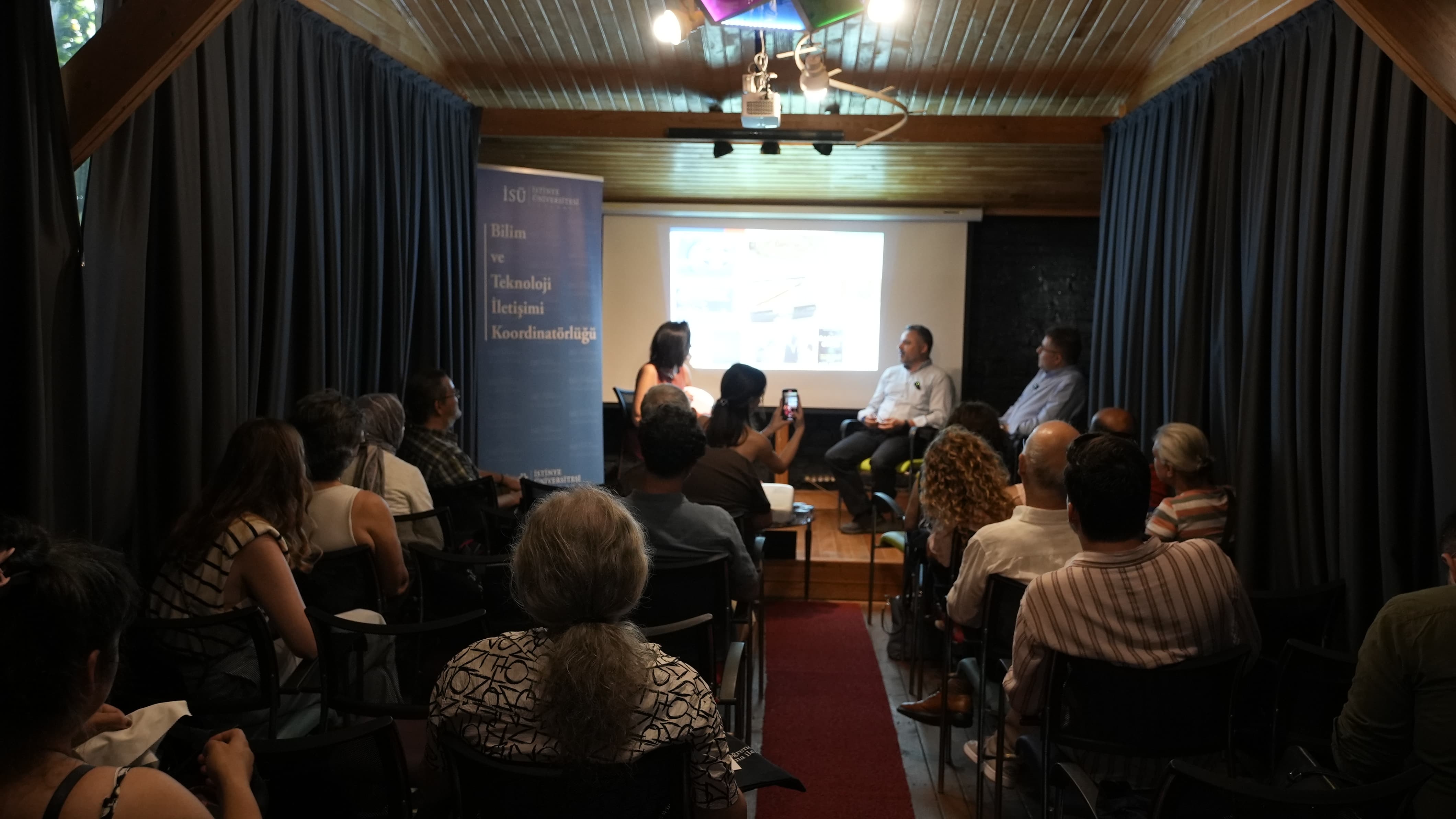
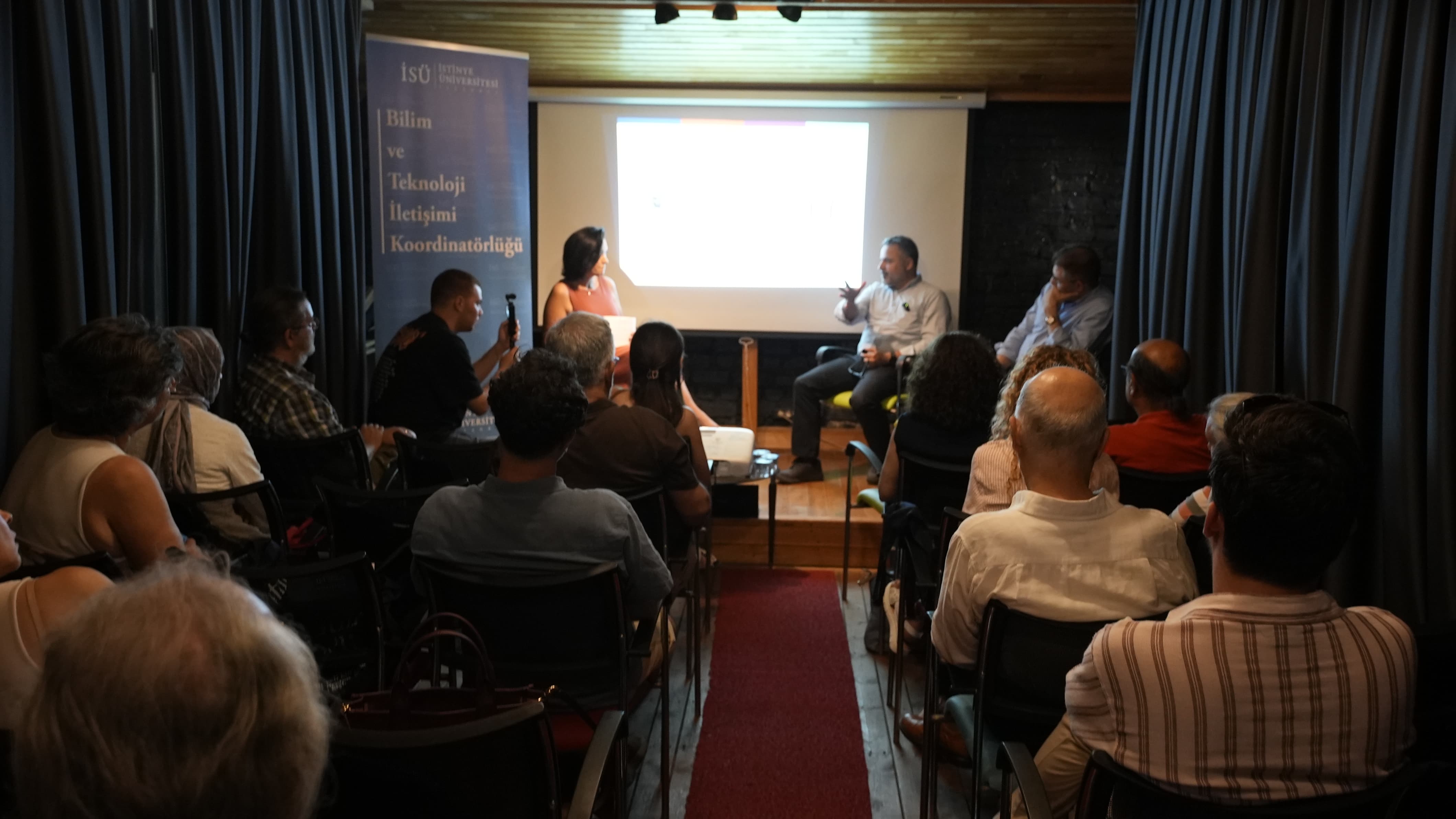
İstinye University Science and Technology Communication Coordination and the Higher Education Council (YÖK) Science Communication Office jointly organized the scientific event titled “Radiation in Balance: Radiation at the Service of Health” at the Özgen Berkol Doğan Science Fiction Library. The event, which deeply examined the use of radiation in health and recent scientific developments in the field, represented an important step toward improving public health literacy.
Organized with the contribution of the Fayda Science Foundation and sponsored by Liv Hospital, the event explored the role of radiation in medical applications and the contribution of particle physics to health technologies through an interdisciplinary approach. The program, attended by expert academics, presented current approaches on the use of radiation in diagnosis and treatment to the public. Coordinated by Prof. Dr. Serkant Ali Çetin, Head of the Department of Basic Sciences and Science and Technology Communication Coordinator at İstinye University, the event featured presentations by Prof. Dr. Merdan Fayda, Head of Radiation Oncology, and Prof. Dr. Taylan Yetkin, faculty member of the Department of Basic Sciences.
“You are exposed to radiation when you smoke”
In the first session, the basic applications and potential risks of radiation in modern medicine were evaluated. Prof. Dr. Merdan Fayda shared his expertise and experience in radiation therapies. Updated information on early diagnostic methods such as mammography and lung screening, as well as radiotherapy and brachytherapy techniques using high-energy X-rays, was presented. Dose control, patient safety, and the impact of technological advances on these processes were discussed within a scientific framework. Prof. Dr. Fayda emphasized the critical importance of radiation therapy in treatment processes:
“When you smoke, you are exposed to radiation. If you smoke two packs a day, you receive the dose equivalent to 80 lung X-rays annually. When you burn a cigarette, you produce polonium. Your mucosa is exposed to radiation. Radiation exists in our daily lives, even in insulation materials around us. We are exposed to some radiation at home as well. However, properly structured radiation has useful effects. For example, radiation destroys tumors and cancer. When applied in the right dose and manner, radiation can be very beneficial for people. Medical imaging has developed greatly over the years. We can see exactly where to apply radiotherapy. Treatment planning has advanced. MRI allows tissues to be seen much more clearly.”
“We obtain information about the body with PET and similar devices”
The second session focused on how particle physics has created a transformative effect in medicine within the scope of basic sciences. The development of particle accelerator technologies, the emergence of advanced diagnostic devices such as PET/CT and MRI, and the use of precise treatment methods such as proton/ion therapies were shared. Current research on new technologies such as FLASH radiotherapy and Boron-Neutron Capture Therapy was also presented. Prof. Dr. Taylan Yetkin said:
“With PET and similar devices, we obtain information about the body. To destroy tumors, you deliver proton or electron therapy. You destroy them. One is for imaging purposes, the other for destruction. After giving patients a radioactive component inside a sugar-based fluid that cancer cells uptake intensively, they are taken to the scan room after one hour. This sugar liquid contains a substance that emits the electron’s antiparticle. When these antiparticles meet electrons in the tumor tissue, that area emits radiation. You collect these emissions with particle detectors and combine them with computer software to create three-dimensional images. In this way, it is a device that can create whole-body images. These are applications of technologies originally developed to understand nature, adapted to medical physics.”
An important step for transferring scientific knowledge to society
The event not only ensured participants’ direct access to scientific content but also served as a remarkable example of effective communication of this knowledge to society. The interdisciplinary structure, communication-focused moderation by Dr. Özgenur Reyhan Güler, and audience interaction strengthened the sessions, offering a platform supporting the transformation of academic knowledge into social benefit. The event, which aimed to raise scientific and social awareness about the intersections of radiation and health, was followed with great interest by attendees. By thoroughly addressing the use of radiation in health and the latest scientific developments, the event represented an important step toward enhancing public health literacy.
Gallery