01/04/2026
Training Programs on Disciplinary Procedures Continue at Our University
At our University, training programs aimed at ensuring that academic and student disciplinary procedures, conducted under the Higher Education Law, are implemented in accordance with principles of justice and procedural law, are ongoing. In line with the principle of “Providing Training on Disciplinary Procedures” emphasized in the letter dated 02 December 2025 by the Presidency of the Council of Higher Education on “Points to Consider in Disciplinary Work and Procedures,” these programs continue to be offered to various target groups.
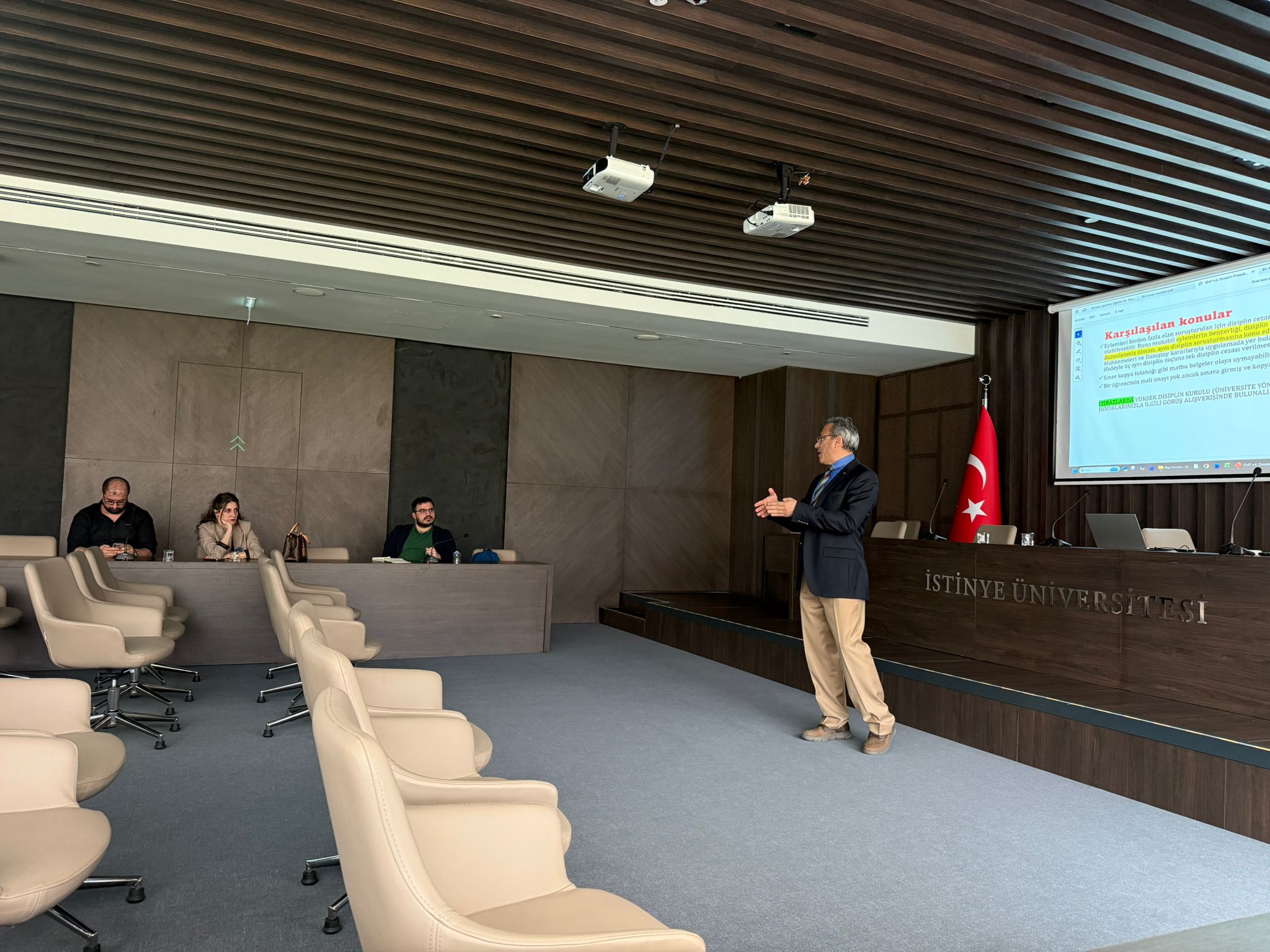
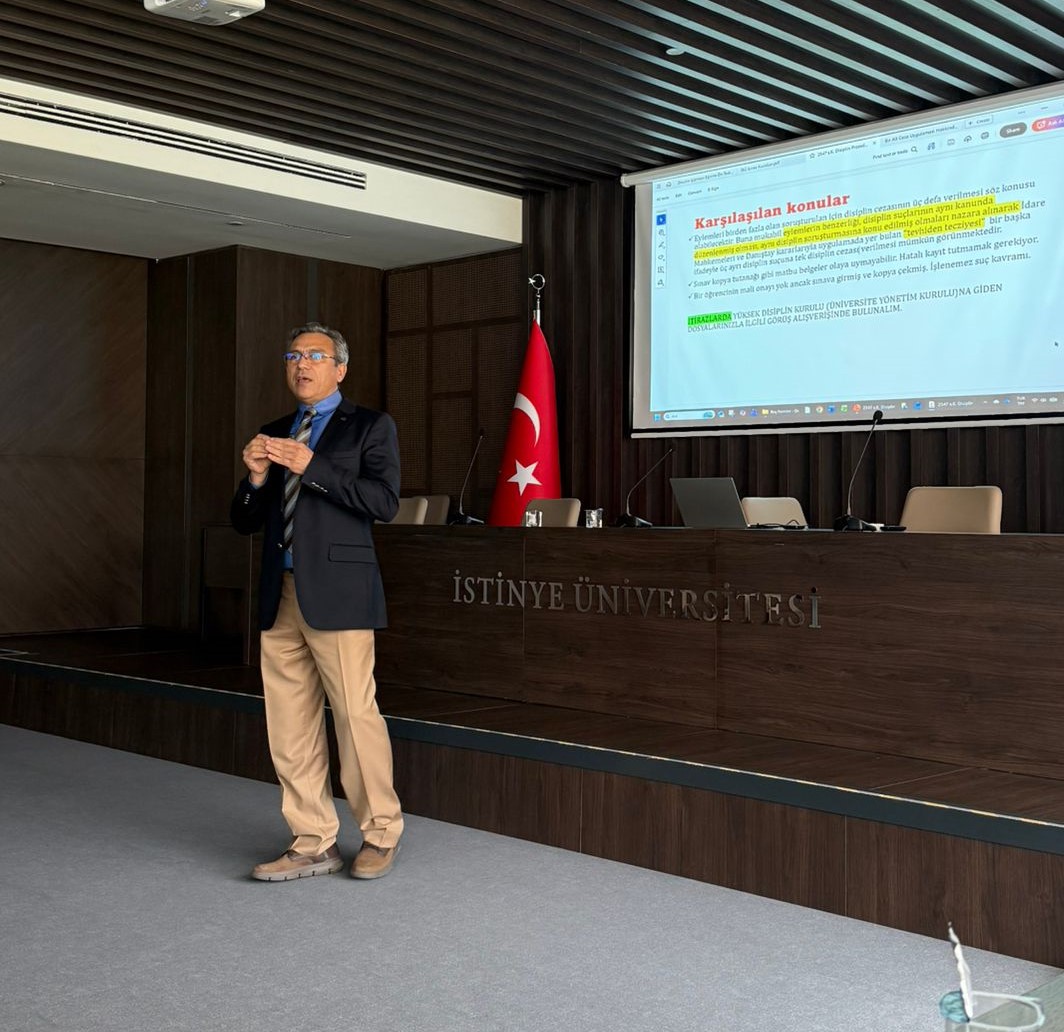
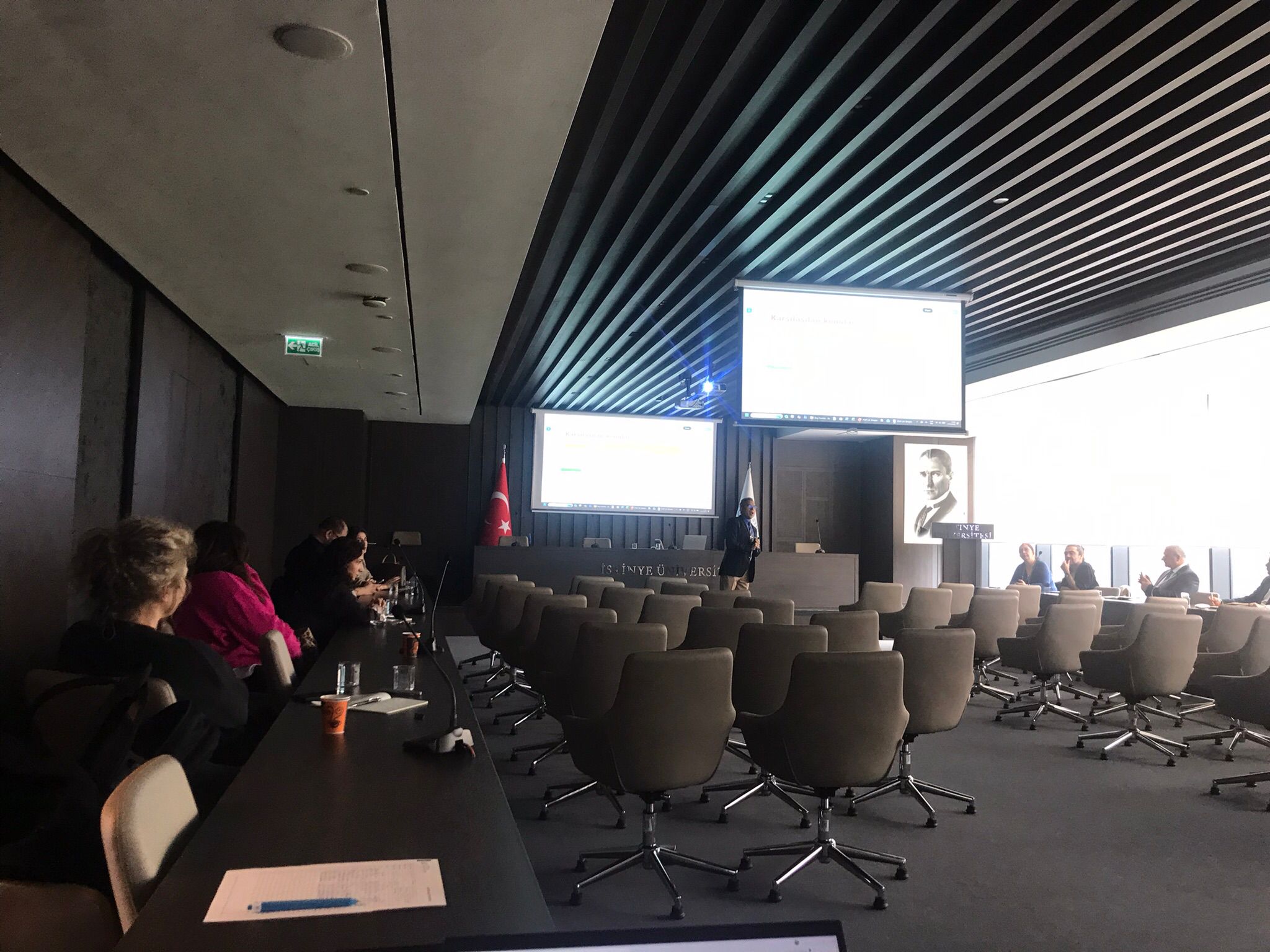
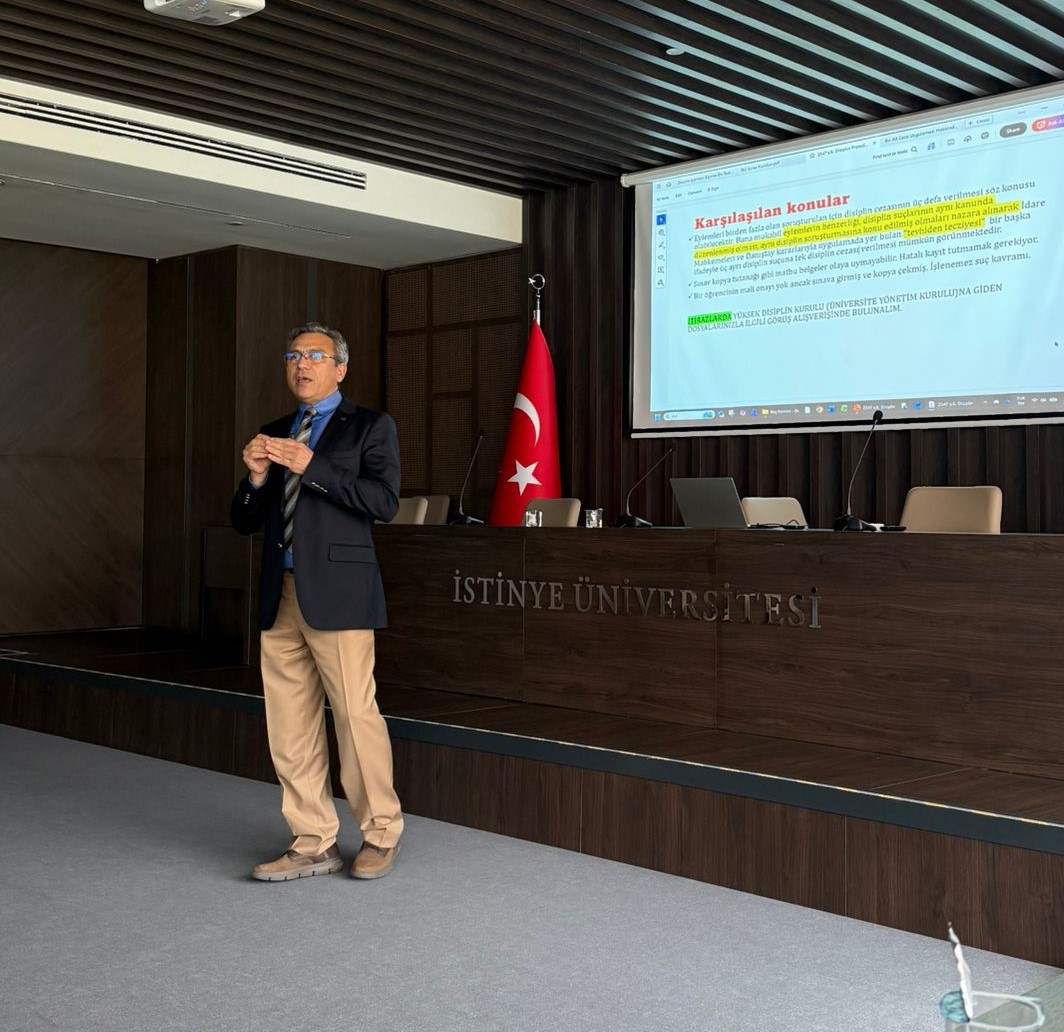
Within this scope, following previous training sessions held for Faculty and Vocational School secretaries on 08–09 January 2026, and for academics involved in disciplinary investigations on 20 and 24 February 2026, a new program was organized on 27 March 2026 at our Vadi Campus Main Campus for the University’s deans and vice directors. The training was conducted by Dr. M. Fatih Çınar, Coordinator of Disciplinary and Legislative Affairs and Faculty of Law at the Vocational School, and lasted for two academic hours.
Focus on Proper Implementation and Legal Framework in Disciplinary Processes
At the beginning of the training, a pre-test highlighting common mistakes in disciplinary processes was administered to raise participants’ awareness. Using an interactive teaching model, the entire process—from the detection of a disciplinary offense to the execution of sanctions—was presented in detail through a process flowchart prepared in light of the Higher Education Law No. 2547 and relevant decisions of the Council of State.
The program also emphasized the differences between disciplinary procedures conducted for academic staff and those for students. Case studies were used to evaluate correct and incorrect practices, allowing participants to share experiences. Additionally, the disciplinary procedure forms and documents, prepared by the ISU Legal Consultancy and made available through MYISU for relevant personnel, were introduced, with emphasis on their adaptation according to the specifics of each case.
The program further addressed distinctions between final and supplementary defense processes, the application of minor sanctions, and the proper classification of disciplinary violations commonly encountered during examinations. Practical examples regarding the correct classification of offenses such as “cheating,” “attempted cheating,” and “disruption of exam order” were shared with participants to enhance practical understanding.