
02/02/2026
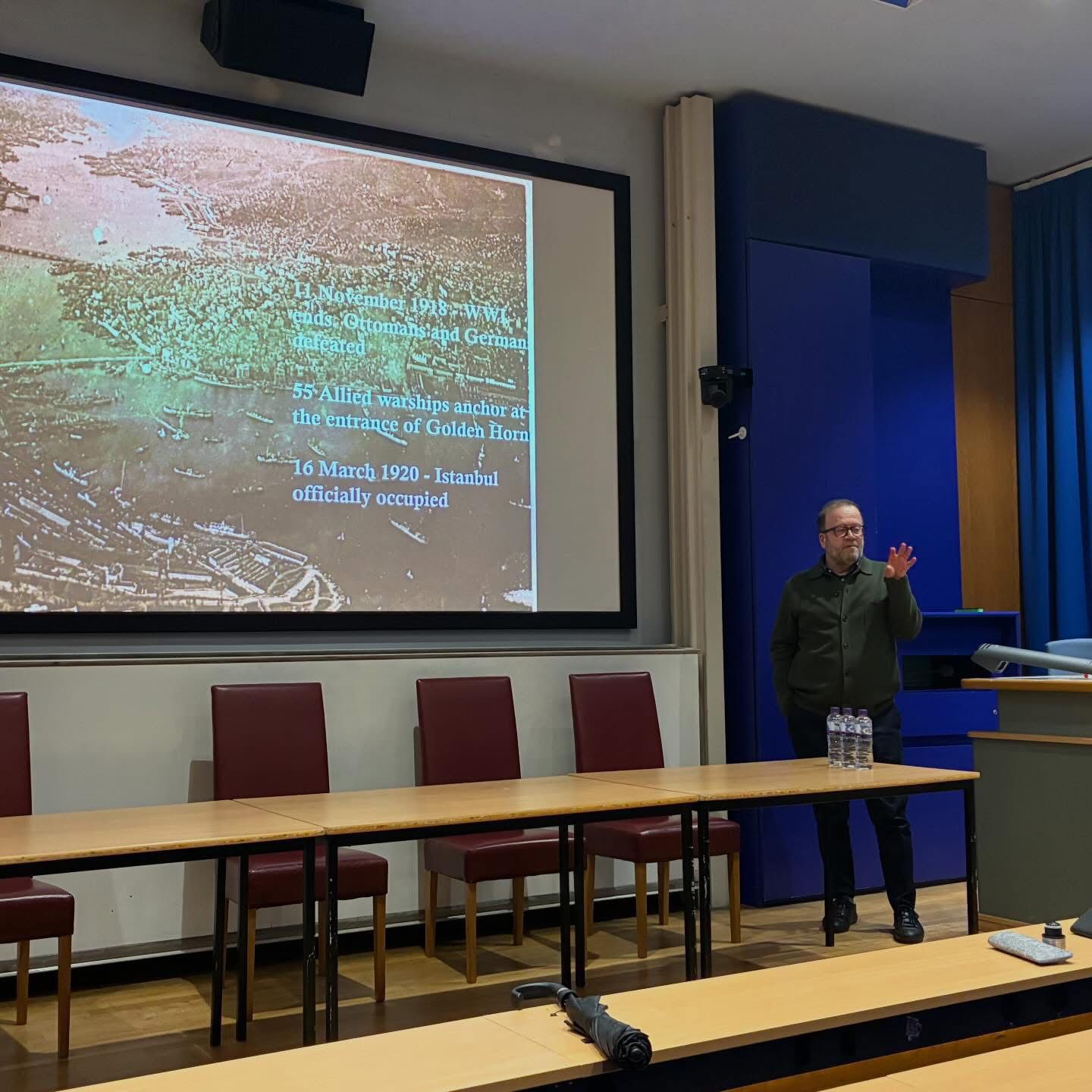
A panel titled “Staging Empires: The Great War and British Cinema at Home and Abroad (1914–1923)” was held on Wednesday, 21 January at the Nash Lecture Theatre, Strand Campus, hosted by King’s College London. The event brought together scholars to explore cinema-going, film reception, and cinema culture during a period shaped by imperial conflict, war, and political upheaval.
The panel examined the representation of the First World War in British cinema and the operations of British film culture both domestically and overseas. Particular attention was given to regulation, censorship, and propaganda as institutional interventions, highlighting cinema as a key site for negotiating political conflict, colonial legacies, cultural transformation, and emerging national identities in the years surrounding the Great War.
The opening paper was delivered by Michael Hammond (University of Southampton), who provided an overview of British cinema culture during the war years. Hammond emphasized that the period from 1914 to 1918 marked a profound transformation for British cinema, affecting exhibition practices as well as cinema’s position within the broader cultural imagination.
Lawrence Napper (King’s College London) followed with a paper focusing on veterans’ unrest in post-war Britain and its intersection with cinema culture. Centering on the 1919 riot outside the Clapham Picture House during the screening of an anti-Bolshevik film, Napper argued that cinema became both a site of political dissent and a vehicle for shaping increasingly conservative veterans’ politics in the aftermath of the war.
One of the highlights of the panel was the presentation by Nezih Erdoğan, Chair of the RTC Department at Istanbul Istinye University. In his paper, “Ending Empires: British Cinema Operations in Occupied Istanbul, 1918–1923,” Erdoğan examined how British authorities managed and regulated cinema in Istanbul during the Allied occupation following the defeat of the Ottoman Empire.
Drawing on a wide range of archival sources—including newspapers, official documents, and private papers of British officers—Erdoğan reconstructed the cinematic landscape of occupied Istanbul. His presentation demonstrated how cinema was mobilized to maintain troop morale, how censorship and regulation functioned under military rule, and how British officials and entrepreneurs sought to promote British film interests in the post-war imperial city. Situating cinema within the broader cultural and political dynamics of occupation, the paper offered new insights into the role of film as an instrument of imperial power and cultural influence.
The panel was chaired by Iain Robert Smith (King’s College London) and concluded with a lively discussion. Overall, the event underscored the importance of cinema not merely as a form of entertainment, but as a crucial medium through which political tensions, imperial transitions, and cultural identities were negotiated in the aftermath of the First World War.