
08/06/2023
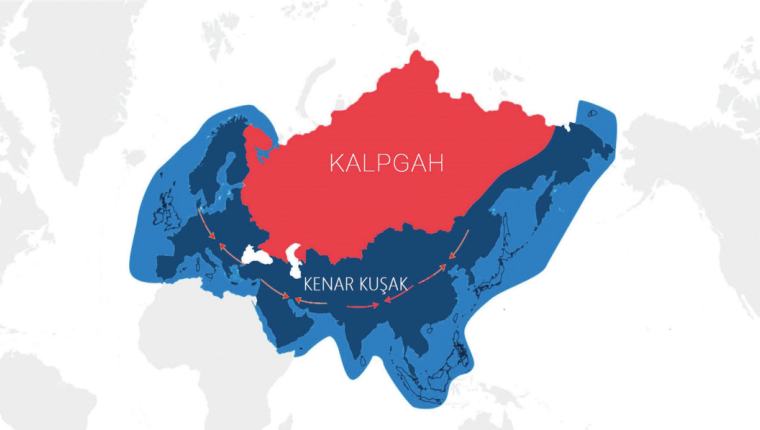
Since its establishment in 1949, **NATO** has been one of the most significant political and military international organizations within the global system. Although the prestige and advantages of being a NATO member were occasionally questioned following the collapse of the Eastern Bloc, the Alliance has continued to maintain its existence and has increasingly tended toward expansion, particularly in the 2000s.
The acceleration of NATO’s evolution and transformation after the dissolution of the **Union of Soviet Socialist Republics (USSR)** indicates that the organization’s focus has not been limited to the Eastern Bloc, but rather that it has aimed to adapt to both existing and future strategic focal points. On the other hand, critics argue that the dissolution of NATO’s main adversary, the USSR, and the subsequent transition to a system oscillating between unipolarity and multipolarity have rendered the organization’s purpose and existence questionable.
Led primarily by **France**, several **European Union (EU)** member states have voiced criticism of NATO’s mission to protect Europe, emphasizing their desire to assume a more active role in ensuring Europe’s security. Within this study, the authors analyze NATO’s actions and responses to political and military crises—particularly during the 2000s—and discuss how these reactions shed light on the Alliance’s future. In this context, the article also examines the expectations of European member states toward NATO in light of recent crises.
Read the full article here:
https://briqjournal.com/beyin-olumu-gerceklesen-nato-otanaziye-dogru-mu…